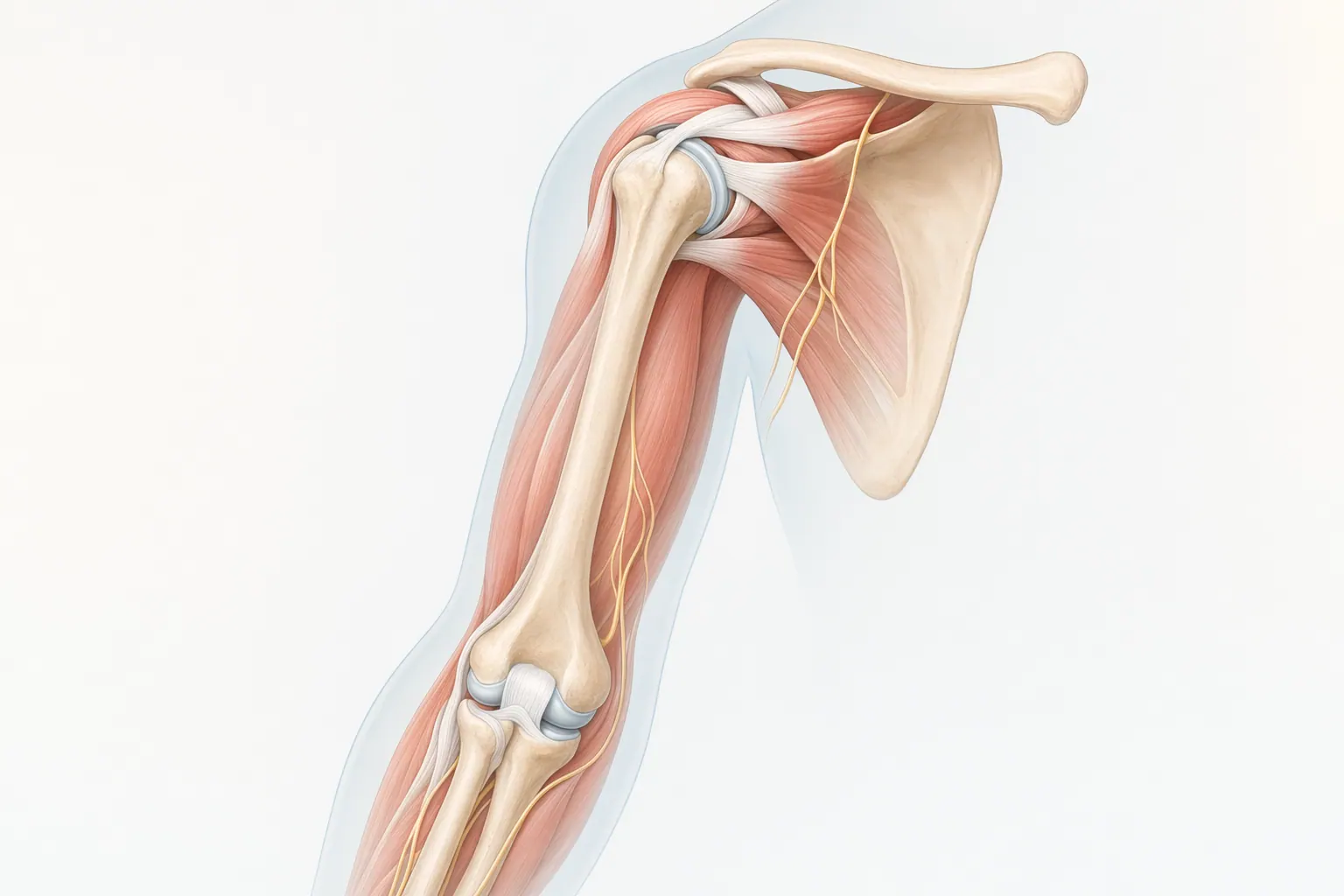
Calcific tendinitis is severe shoulder pain caused by calcium-deposit buildup within the rotator cuff tendons, often mistaken for impingement or a rotator cuff tear. Pain can build gradually or flare suddenly and severely, usually without any injury, often as the body starts to reabsorb the deposit.
Most patients with calcific tendinitis of the shoulder improve with conservative care: anti-inflammatory medication, physical therapy, and a steroid injection during a severe flare. Many deposits are reabsorbed by the body over time. When pain persists, options include ultrasound-guided needling and lavage of the deposit and arthroscopic removal.
Below, we walk through the anatomy involved, the symptoms and causes we most often see, how we diagnose calcific tendinitis of the shoulder, and the full range of treatment options, from the simplest to the most involved.