Common knee concerns we treat
- Pain that limits walking, lifting, or sleep
- Stiffness, swelling, or reduced range of motion
- Sports injuries: acute or overuse
- Arthritis or post-traumatic joint changes
- Conditions other doctors couldn't resolve
Damage to the knee's smooth joint surface
Cartilage injuries in the knee (focal defects, flaps, or loose bodies) interrupt the smooth gliding surface of the joint and can cause pain, catching, and locking. Same-day or next-day evaluations across eight LA-area offices.

Board-certified surgeons and podiatrists across eight Los Angeles area neighborhoods.
Key takeaways
Cartilage injuries in the knee (focal defects, flaps, or loose bodies) interrupt the smooth gliding surface of the joint and can cause pain, catching, and locking. Symptoms can develop gradually or after a specific injury, so early evaluation matters when function starts to decline.
Cartilage has little ability to heal on its own. Small or mildly symptomatic injuries are often managed with conservative care: activity changes, physical therapy, an unloader brace, and injections to calm pain and swelling. Loose bodies, unstable flaps, and larger defects that cause catching or locking usually need arthroscopic treatment or a cartilage restoration procedure, and our specialists offer the options discussed below.
Below, we walk through the anatomy involved, the symptoms and causes we most often see, how we diagnose a cartilage injury, and the full range of treatment options, from the simplest to the most involved.
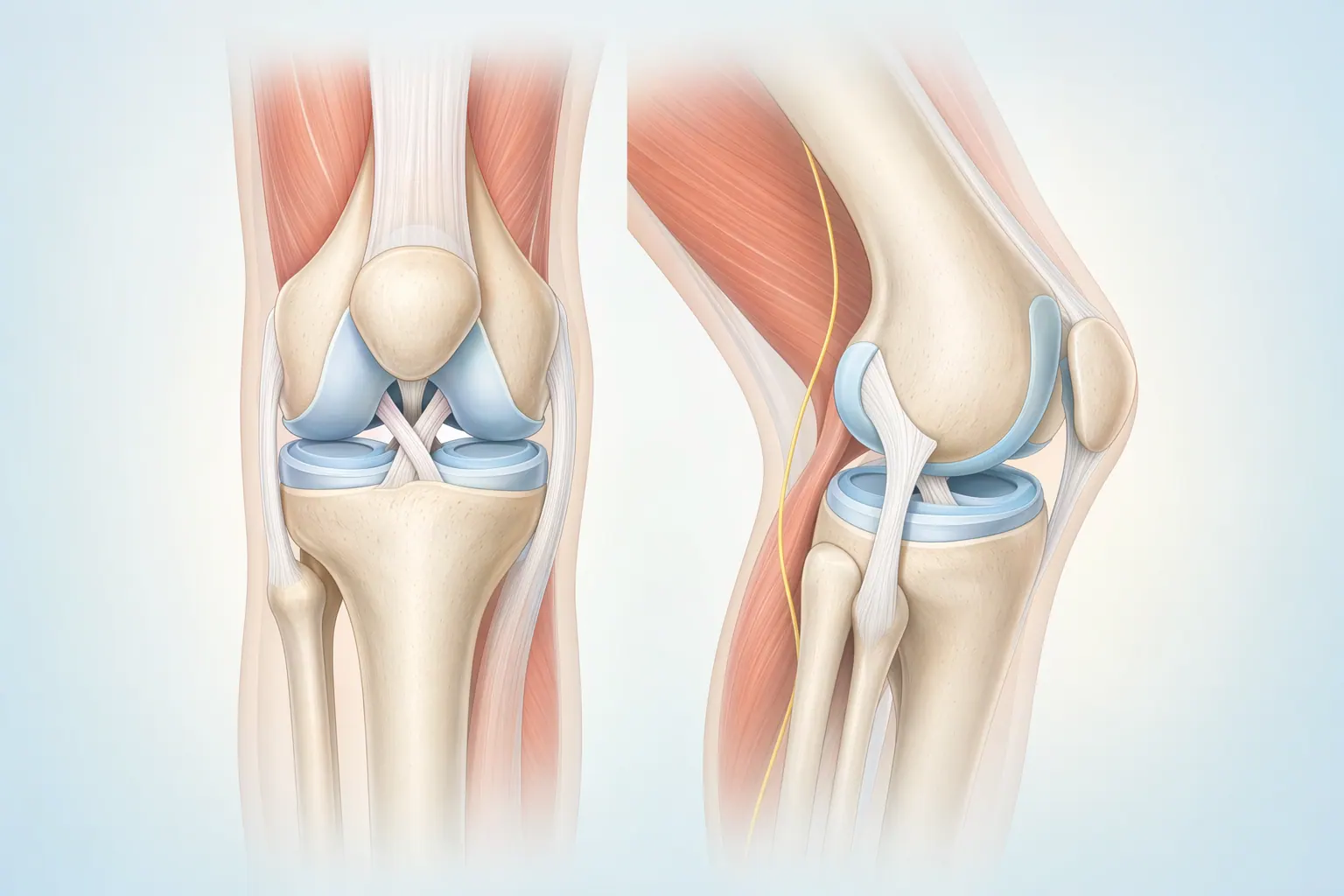
The knee is the body's largest hinge joint: it bears your weight, absorbs impact, and lets you walk, run, and pivot. Cartilage and meniscus cushion the joint, while ligaments (ACL, PCL, MCL, LCL) keep it stable. Most knee problems come from wear of those cushioning surfaces or from twisting injuries that damage a ligament or meniscus.
You want answers, fast, and we're built to give them. Most patients leave their first LAOSS visit with a clear diagnosis and a written plan, not another referral chain.
Here's what your initial visit for a cartilage injury typically looks like:
Schedule your evaluation at the LAOSS office nearest you.
Once we've confirmed the diagnosis, the next step is matching the right treatment to your situation. We start with the least-invasive option that fits, and escalate only when it doesn't.
Non-surgical options designed to relieve pain, restore movement, and avoid the OR when possible.
Minimally invasive and reconstructive procedures performed by board-certified orthopedic surgeons.
Knee care is highly technique-dependent. Volume, training, and judgment together determine the outcome you actually feel six months later.
Our knee specialists move stepwise: start with the least-invasive option that fits your situation, escalate only when it doesn't.
If most of these match your situation, an evaluation with a knee specialist is the next step.
These signs typically point toward an in-person evaluation with a knee specialist.
Your first visit is built to give you an answer the same day, not just another referral.
ImportantSeek urgent evaluation for sudden severe pain, numbness, progressive weakness, or any sign of infection (fever, increasing redness or swelling).
Recovery is rarely a straight line, but a clear plan with measurable milestones makes the path predictable.
In the first two weeks we focus on protecting the knee, calming inflammation, and restoring basic motion.
Targeted physical therapy rebuilds strength, mobility, and confidence in the knee.
Once function is restored, the focus shifts to keeping you there, and catching any recurrence early.
We talk through the risks and benefits with every patient. Informed consent is a conversation, not a form.
Every orthopedic intervention carries a small set of standard risks. We screen, prepare, and monitor for these on every patient.
Some risks are tied to the structures we're treating in the knee. We discuss these in detail at your visit so you can weigh them against the benefits.
At LAOSS, our knee specialists are board-certified and treat these problems every day. From minimally invasive arthroscopic techniques to joint replacement and arthritis management, our physicians bring decades of experience to every case. We have cared for Los Angeles patients since 2007, with one goal for each: less pain, better movement, and a return to the activities you love.
Accepting new patients
Total Joint & Sports Medicine
Don't let a cartilage injury be something you just power through. With same- or next-day appointments at multiple Los Angeles locations, you'll never wait weeks or months for answers. The same team handles your diagnosis, treatment, and recovery. Whether you need physical therapy, injections, or surgery, we plan it with you and coordinate each step.
Call or schedule online today to see a knee specialist in Los Angeles.
Book a visit with a knee specialist at any of our eight Los Angeles-area offices.