Common spine & neck concerns we treat
- Pain that limits walking, lifting, or sleep
- Stiffness, swelling, or reduced range of motion
- Sports injuries: acute or overuse
- Arthritis or post-traumatic joint changes
- Conditions other doctors couldn't resolve
Buttock pain from an irritated sciatic nerve
Piriformis syndrome is buttock and leg pain caused by the piriformis muscle irritating the sciatic nerve, often mistaken for true lumbar sciatica. Same-day or next-week evaluations across eight LA-area offices.

Board-certified surgeons and podiatrists across eight Los Angeles area neighborhoods.
Key takeaways
Piriformis syndrome is buttock and leg pain caused by the piriformis muscle irritating the sciatic nerve, often mistaken for true lumbar sciatica. Symptoms can develop gradually or after a specific injury, so early evaluation matters when function starts to decline.
Most patients with piriformis syndrome improve with conservative care: physical therapy that stretches the piriformis and strengthens the hip and core, breaks from prolonged sitting, anti-inflammatory medication, and an image-guided injection into the muscle when pain persists. Because the symptoms overlap with sciatica that starts in the spine, part of the evaluation is ruling out a disc or other spinal cause. Surgery to release the muscle and free the nerve is rarely needed.
Below, we walk through the anatomy involved, the symptoms and causes we most often see, how we diagnose piriformis syndrome, and the full range of treatment options, from the simplest to the most involved.
This is a pain and numbness you feel in your buttock and down the back of your leg. It involves the sciatic nerve. That's a large nerve that travels from your lower spine down to your foot.
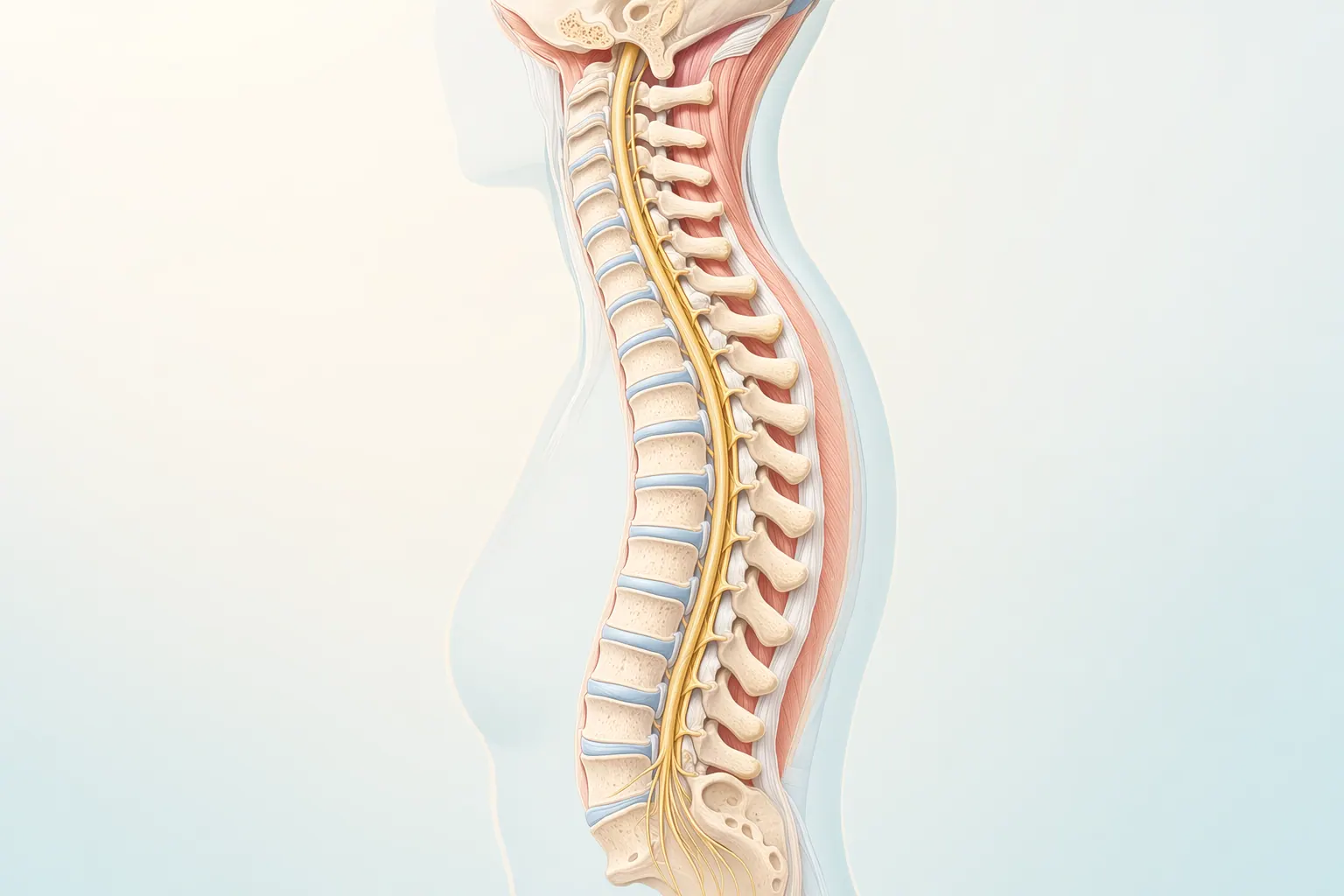
The spine has 33 vertebrae stacked in five regions: cervical, thoracic, lumbar, sacral, and coccygeal. Between each vertebra sits a disc that cushions and allows motion. The spinal cord and nerve roots run through the canal, so when a disc bulges, a joint enlarges, or a vertebra slips, pain can radiate into the arms or legs.
You want answers, fast, and we're built to give them. Most patients leave their first LAOSS visit with a clear diagnosis and a written plan, not another referral chain.
Here's what your initial visit for piriformis syndrome typically looks like:
Schedule your evaluation at the LAOSS office nearest you.
Once we've confirmed the diagnosis, the next step is matching the right treatment to your situation. We start with the least-invasive option that fits, and escalate only when it doesn't.
Non-surgical options designed to relieve pain, restore movement, and avoid the OR when possible.
Considered only after other causes of sciatica are ruled out and thorough non-surgical care has not helped.
Spine & neck care is highly technique-dependent. Volume, training, and judgment together determine the outcome you actually feel six months later.
Our spine & neck specialists move stepwise: start with the least-invasive option that fits your situation, escalate only when it doesn't.
If most of these match your situation, an evaluation with a spine & neck specialist is the next step.
These signs typically point toward an in-person evaluation with a spine & neck specialist.
Your first visit is built to give you an answer the same day, not just another referral.
ImportantGo to the emergency room or call 911 for loss of bowel or bladder control, numbness in the groin or inner thighs, or weakness in the arms or legs that is getting worse quickly. Seek urgent evaluation for sudden severe pain, new numbness, or any sign of infection (fever, increasing redness or swelling).
Recovery is rarely a straight line, but a clear plan with measurable milestones makes the path predictable.
In the first two weeks we focus on protecting the spine & neck, calming inflammation, and restoring basic motion.
Targeted physical therapy rebuilds strength, mobility, and confidence in the spine & neck.
Once function is restored, the focus shifts to keeping you there, and catching any recurrence early.
We talk through the risks and benefits with every patient. Informed consent is a conversation, not a form.
Every orthopedic intervention carries a small set of standard risks. We screen, prepare, and monitor for these on every patient.
Some risks are tied to the structures we're treating in the spine & neck. We discuss these in detail at your visit so you can weigh them against the benefits.
At LAOSS, our spine & neck specialists are board-certified and treat these problems every day. From image-guided injections and minimally invasive spine procedures to spine surgery when it is needed, our physicians bring decades of experience to every case. We have cared for Los Angeles patients since 2007, with one goal for each: less pain, better movement, and a return to the activities you love.
Accepting new patients
Pain Management & Rehabilitation
Speaks English and Spanish
Habla español
Don't let piriformis syndrome be something you just power through. With same- or next-day appointments at multiple Los Angeles locations, you'll never wait weeks or months for answers. The same team handles your diagnosis, treatment, and recovery. Whether you need physical therapy, injections, or surgery, we plan it with you and coordinate each step.
Call or schedule online today to see a spine & neck specialist in Los Angeles.
Book a visit with a spine & neck specialist at any of our eight Los Angeles-area offices.