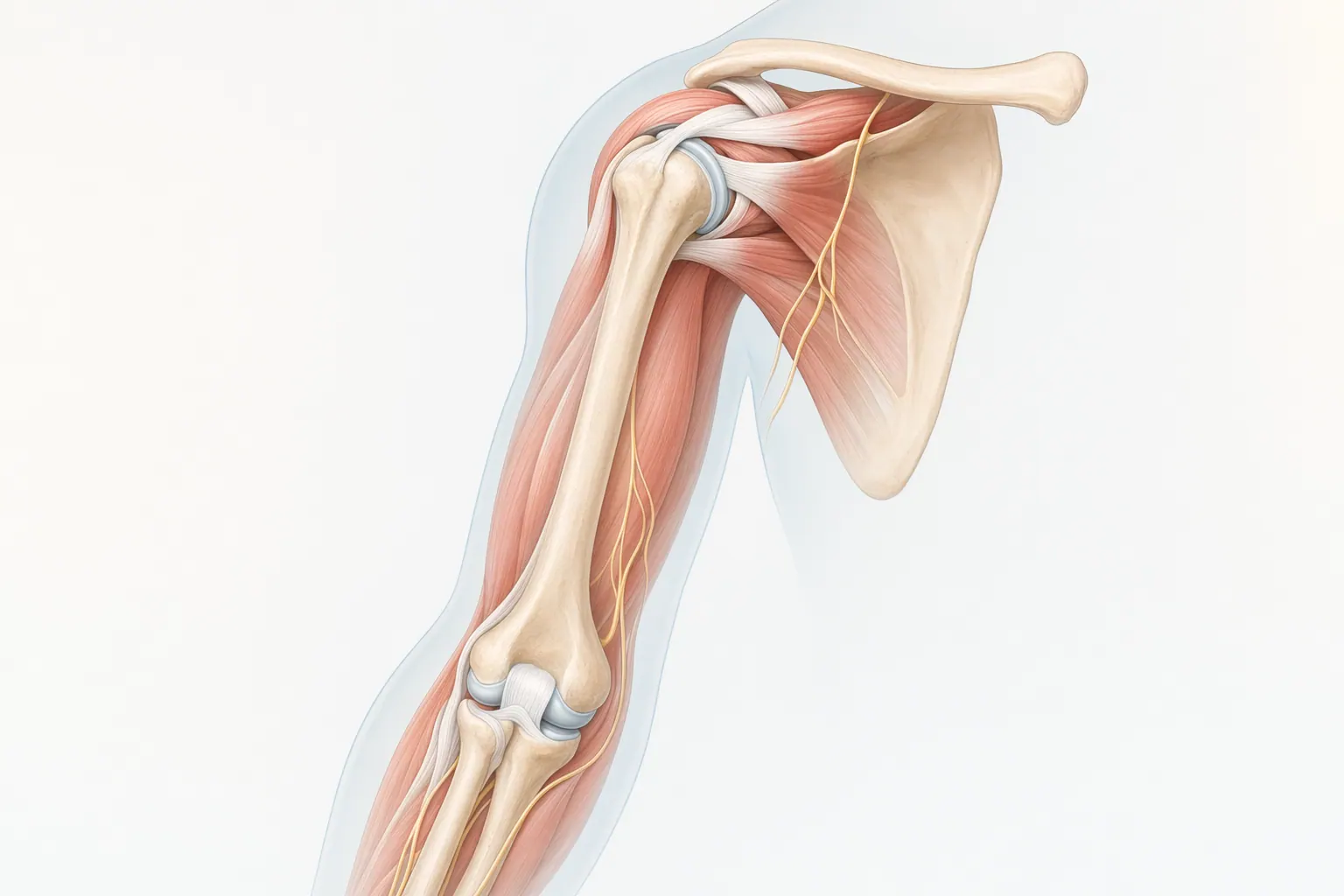
Shoulder arthritis is the gradual loss of cartilage between the ball and socket of the shoulder, producing pain, stiffness, and reduced range of motion. Symptoms can develop gradually or after a specific injury, so early evaluation matters when function starts to decline.
Shoulder arthritis cannot be reversed, but many patients manage their symptoms well with conservative care: activity changes, anti-inflammatory medication, gentle physical therapy to keep the shoulder moving, and steroid injections for flare-ups. When pain and stiffness keep limiting sleep and daily life despite these measures, shoulder replacement is the next step to consider, and we explain the options discussed below.
Below, we walk through the anatomy involved, the symptoms and causes we most often see, how we diagnose shoulder arthritis, and the full range of treatment options, from the simplest to the most involved.