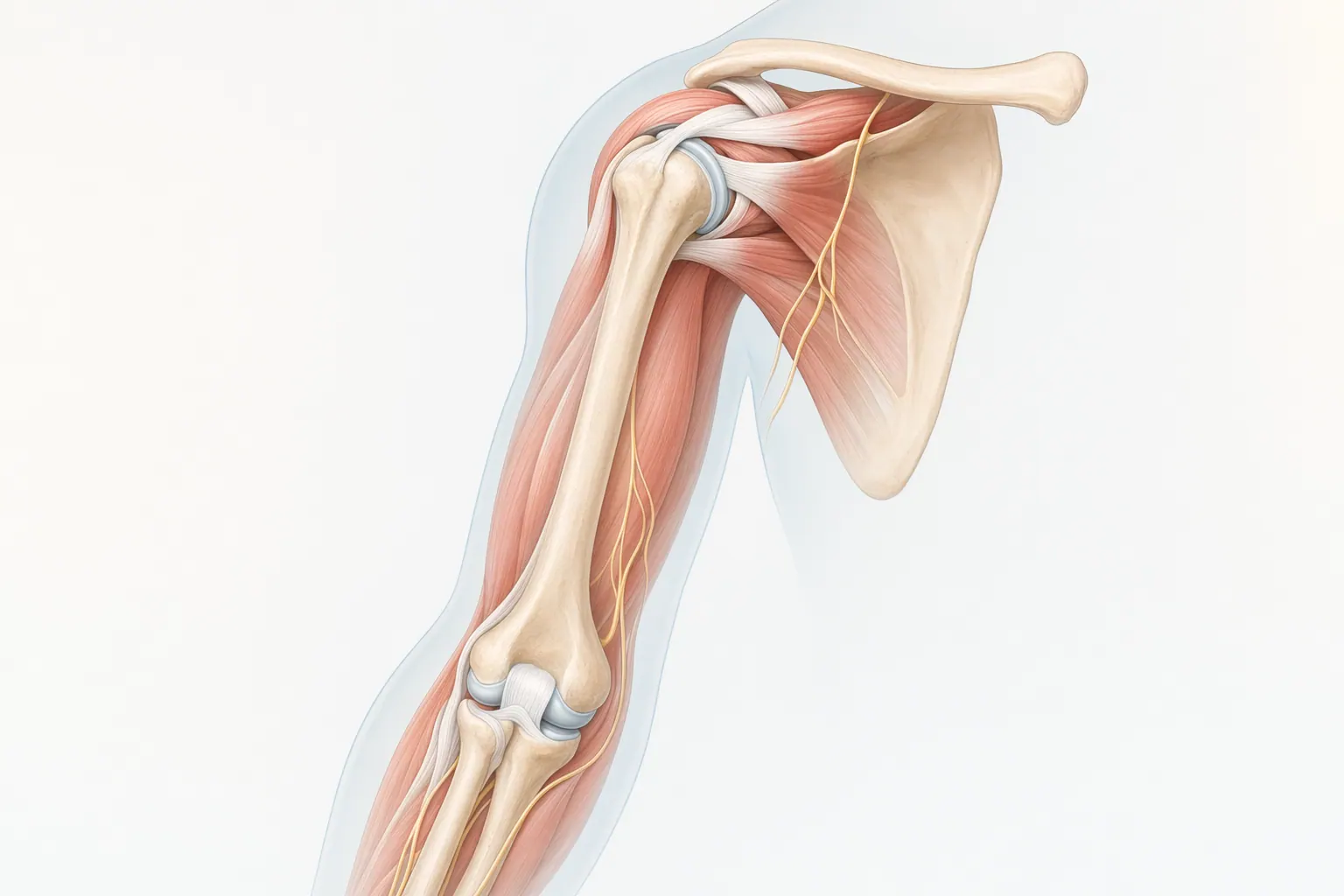
Thoracic outlet syndrome (TOS) is compression of the nerves or blood vessels passing through the space between the collarbone and first rib, producing arm pain, numbness, and weakness. Symptoms can develop gradually or after a specific injury, so early evaluation matters when function starts to decline.
Most people with thoracic outlet syndrome have the nerve (neurogenic) type, which usually improves with conservative care: physical therapy focused on posture, stretching of the tight neck and chest muscles, and shoulder-blade strengthening, along with activity changes. Injections into the scalene muscles are sometimes used to confirm the diagnosis or ease symptoms. The less common blood vessel types, which can cause arm swelling, color change, or a cold hand, need prompt vascular evaluation and are more often treated with surgery. If an arm suddenly becomes swollen, blue, pale, or cold, go to the emergency room, because this can mean a blood clot or a blocked artery.
Below, we walk through the anatomy involved, the symptoms and causes we most often see, how we diagnose thoracic outlet syndrome, and the full range of treatment options, from the simplest to the most involved.