Los Angeles Orthopedic

Minimally Invasive Arthroscopy in Los Angeles

Arthroscopy is a minimally invasive procedure that lets our surgeons diagnose and treat joint problems through a few small incisions and a pencil-thin camera. Less tissue trauma, smaller scars, and a faster path back to the activities you care about.

Minimally invasive arthroscopy at LAOSS orthopedic clinic in Los Angeles — board-certified specialists, same-day appointments
Live · Now Accepting

Experts in arthroscopy care.

Surgical and non-surgical options at LAOSS.

15+
Years caring
Same-day appointments
Often available
★★★★★
4.9 · 7,500+ reviews

Joint problems we treat arthroscopically

  • Meniscus tears, ACL and other ligament injuries
  • Rotator cuff tears and shoulder labral tears
  • Hip labral tears and femoroacetabular impingement
  • Loose bodies, cartilage damage, and joint inflammation
  • Persistent pain that hasn't responded to PT or injections

What sets LAOSS apart

  • Same- or next-day appointments at eight Los Angeles–area offices
  • On-site imaging; PT coordinated with your in-network provider
  • Conservative-first care, surgery only when needed
  • Board-certified specialists, not generalists
Key takeaways
  • Minimally invasive joint surgery using small incisions and a camera-guided scope.
  • Common joints: knee, shoulder, hip, ankle, elbow, and wrist.
  • Faster recovery than open surgery; most patients go home the same day.
  • Used for meniscus tears, ACL reconstruction, rotator cuff and labral repair, cartilage damage, loose-body removal, and more.
Overview

What is arthroscopy?

Arthroscopy is a minimally invasive surgical technique where a pencil-thin fiber-optic camera (the arthroscope) is inserted through a small incision to look inside a joint. Through one or two additional tiny incisions, your surgeon can repair what they see — without the large open incision that traditional joint surgery requires.

At LAOSS, we use arthroscopy for the knee, shoulder, hip, ankle, elbow, and wrist. The most common procedures we perform arthroscopically are meniscus repair, ACL reconstruction, rotator cuff repair, labral repair (shoulder and hip), cartilage debridement, loose-body removal, and synovectomy.

Because the approach is minimally invasive, most patients go home the same day, return to desk work within days, and reach full recovery faster than with open surgery. The structures we're treating still need time to heal — but the path to get there is shorter, less painful, and leaves smaller scars.

Patient education

Watch: Arthroscopy (Overview)

If you have a joint problem, your surgeon may want to try arthroscopy. This lets your surgeon see inside your joint with a small, thin camera called an "arthroscope." It can be used on any joint, but let's see it in the knee.

Animations licensed from ViewMedica · Swarm Interactive

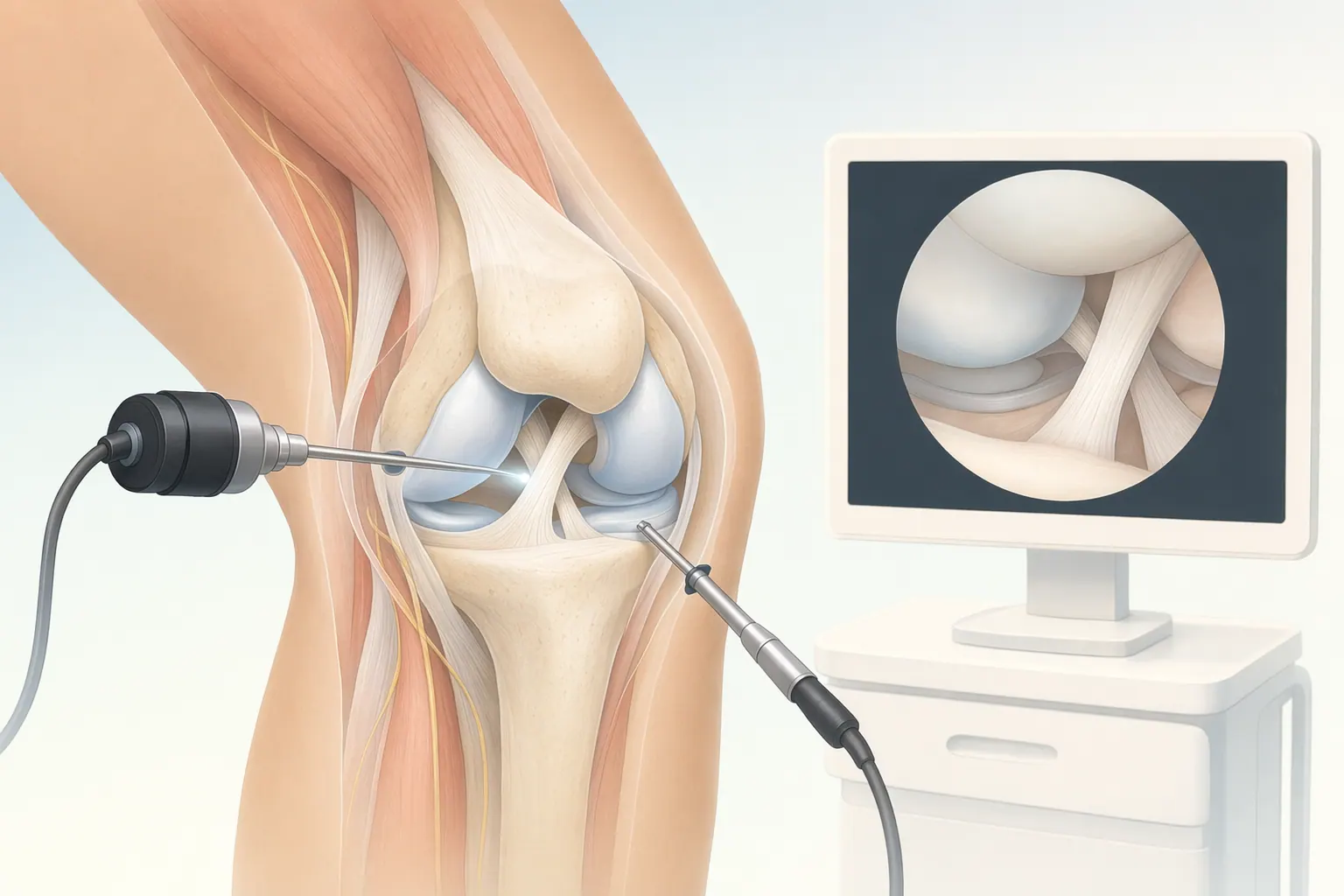
Anatomical illustration of an arthroscopic joint procedure showing the arthroscope and micro-instruments inserted through small portal incisions
Arthroscopy — a fiber-optic camera and micro-instruments enter through small portal incisions to repair the joint from inside.
Anatomy

Inside an arthroscopic procedure.

An arthroscope is roughly the diameter of a pencil. It carries a light source and a high-definition camera that projects a magnified view of the joint onto a monitor in the OR. Through one or two additional 5–10 mm portals, your surgeon passes specialized micro-instruments — shavers, suture passers, anchors, graspers — to repair the meniscus, cartilage, ligament, or labrum the camera reveals.

Self-orient

Common reasons we do arthroscopy.

Symptoms

Common symptoms

  • Meniscus tears (acute or degenerative)
  • ACL, PCL, and other ligament tears
  • Rotator cuff tears and shoulder impingement
  • Shoulder labral tears (SLAP, Bankart)
  • Hip labral tears and femoroacetabular impingement
  • Articular cartilage damage and chondral defects
  • Loose bodies (bone or cartilage fragments) inside a joint
  • Synovitis or chronic joint inflammation
Causes

Common causes

  • Persistent joint pain that hasn't responded to conservative care
  • Mechanical symptoms — locking, catching, or the joint giving way
  • Acute sports injury with a clear structural finding on MRI
  • Failed physical therapy, injections, bracing, or activity modification
  • Imaging that confirms a repairable tear, defect, or loose body
Diagnostics

How we decide if arthroscopy is right for you

Arthroscopy is a tool — not a default. At LAOSS, we recommend it only when the diagnosis is clear, conservative care has had a fair trial, and the structure we'd repair is actually fixable with a scope.

Your evaluation starts with history and exam: when the pain started, what made it worse, what's already been tried. From there we add on-site X-ray at most offices and order MRI when soft-tissue detail matters (meniscus, ligaments, rotator cuff, labrum, cartilage). Most patients leave their first visit with a diagnosis, a written plan, and a clear answer on whether surgery is on the table.

If arthroscopy is the right next step, we walk you through exactly which structures we'll address, what the recovery looks like for your specific joint, and what we'll do if we find something different once we're inside.

Treatment options

Conservative care first, arthroscopy when warranted

Most joint problems that ultimately need arthroscopy first get a real trial of non-surgical care. Surgery is the answer when the diagnosis is structural, the symptoms are mechanical, and conservative treatment has stopped making progress.

Conservative care
Step 1

Conservative care first

Non-surgical options designed to relieve pain, restore movement, and avoid the OR when possible.

  • Activity modification and relative rest
  • Physical therapy with your in-network provider
  • Targeted corticosteroid or anti-inflammatory injections
  • PRP and regenerative-medicine injections (select cases)
  • Bracing, taping, or unloader support
  • NSAIDs and structured home program
Surgical care
When needed

Arthroscopic procedures we perform

Minimally invasive joint surgery performed by board-certified orthopedic surgeons when conservative care has run its course.

  • Knee arthroscopy — meniscus repair / meniscectomy
  • ACL and PCL reconstruction
  • Shoulder arthroscopy — rotator cuff repair, subacromial decompression
  • Labral repair (shoulder SLAP / Bankart, hip)
  • Hip arthroscopy for FAI and labral pathology
  • Cartilage debridement, microfracture, chondroplasty
  • Loose-body removal and synovectomy
  • Ankle, elbow, and wrist arthroscopy
Surgeon expertise

Why experience matters.

Why experience matters

Arthroscopy is highly technique-dependent. Volume, training, and judgment together determine the outcome you actually feel six months later.

  • Precise diagnosis from imaging and exam
  • Conservative-first care that avoids unnecessary surgery
  • Surgical technique refined over thousands of cases
  • On-site imaging + coordinated PT through your in-network provider

The LAOSS approach

Our arthroscopy specialists move stepwise — start with the least-invasive option that fits your situation, escalate only when it doesn't.

  • Same-day imaging at most offices
  • PT coordinated in your insurance network
  • Board-certified surgeons performing the procedures themselves
  • Direct access to your specialist between visits
Candidacy

Am I a candidate?

If most of these match your situation, an evaluation with an arthroscopy specialist is the next step.

You may be

You may be a candidate if

These signs typically point toward an in-person evaluation for arthroscopic surgery.

  • Joint pain or stiffness that's lasted weeks to months
  • Mechanical symptoms — locking, catching, popping, or giving way
  • Symptoms that limit sport, work, or sleep
  • A clear structural finding on MRI (tear, defect, loose body)
  • Conservative care (PT, injections, time) hasn't fully resolved it
Evaluation

What evaluation includes

Your first visit is built to give you an answer the same day, not just another referral.

  • Detailed history — onset, mechanism, what makes it better or worse
  • Hands-on exam focused on the affected joint
  • On-site imaging at most offices (X-ray, ultrasound)
  • MRI ordered when soft-tissue detail is needed
  • Clear plan with options ranging from conservative to surgical
ImportantSeek urgent evaluation for sudden severe pain, a joint that's locked or won't bear weight, numbness or progressive weakness, or any sign of infection (fever, increasing redness or swelling).
Recovery

Your arthroscopy recovery roadmap.

Recovery is rarely a straight line — but a clear plan with measurable milestones makes the path predictable. Exact timelines depend on the joint and the repair.

01Days 0–14

Right after surgery

Most patients go home the same day. The first two weeks focus on protecting the repair, controlling swelling, and starting gentle motion.

  • Outpatient procedure — home the same day for most cases
  • Sling, brace, or crutches based on joint and repair
  • Ice, elevation, and pain control as needed
  • Desk-work return in days for many patients
02Weeks 2–8

Rehabilitation

Targeted physical therapy rebuilds strength, mobility, and confidence in the joint. PT plan is written by your surgeon and coordinated with your in-network provider.

  • Progressive range-of-motion and strengthening
  • Manual therapy and soft-tissue work
  • Sport- or job-specific movement re-training
  • Coordinated PT through your in-network provider
03Months 2+

Return to activity

Timeline depends on the procedure: a simple meniscectomy can be weeks; an ACL reconstruction or rotator cuff repair is typically 4–6 months to full return.

  • Return-to-sport plan with measured benchmarks
  • Home program tailored to your activity
  • Follow-up imaging if symptoms change
  • Direct line back to your specialist if needed
Risks & considerations

What to weigh before you decide.

We talk through the risks and benefits with every patient — informed consent is a conversation, not a form.

General

General considerations

Every orthopedic intervention carries a small set of standard risks. We screen, prepare, and monitor for these on every patient.

  • Infection (rare with modern technique and prophylaxis)
  • Bleeding or bruising at the portal sites
  • Reaction to anesthesia or medications
  • Blood clots (DVT) — screened for and mitigated
Specific

Arthroscopy-specific considerations

Some risks are tied to the joint and the structures we're repairing. We discuss these in detail at your visit so you can weigh them against the benefits.

  • Temporary stiffness or swelling during recovery
  • Incomplete pain relief in a small percentage of cases
  • Re-tear of the repaired tissue if rehab is rushed
  • Conversion to open surgery if the finding is larger than expected
Your care team

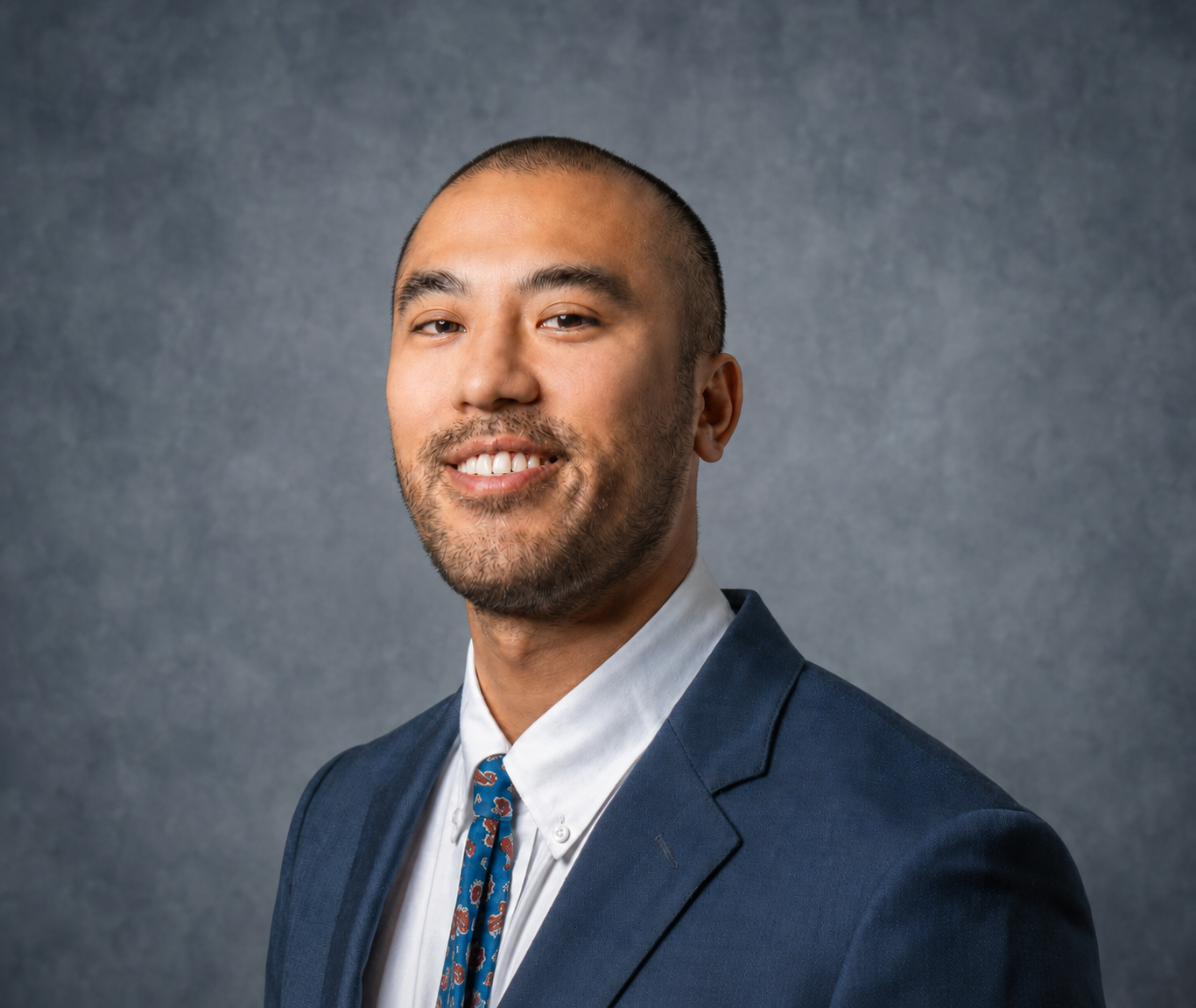
Meet the arthroscopy specialists at LAOSS

At LAOSS, your arthroscopic care is led by board-certified orthopedic surgeons with fellowship training in sports medicine, joint preservation, and minimally invasive techniques. From your first evaluation through rehab, our specialists guide the whole arc — diagnosis, decision-making, the procedure itself, and the PT plan that gets you back to the activities you care about.

Patient reviews

What patients say about us.

★★★★★4.97,500+ Google reviews
Came here after a fall and they got me in same day. Cast on within an hour, follow-up scheduled before I left. Best urgent ortho experience I've had.
Tanya Williams
Silver Lake, CA · 28 March 2025
Explore related care

Find care by body area.

Jump to a nearby condition page and compare treatment paths across the body.

FAQ

Common arthroscopy questions

  • Arthroscopy uses small portal incisions (typically 5–10 mm) and a tiny camera to work inside the joint. Open surgery requires a larger incision to expose the joint directly. With arthroscopy you get less tissue trauma, smaller scars, less post-op pain, and faster return to activity — with similar or better outcomes for most repairable problems.
  • It depends on the joint and the procedure. Many arthroscopies are done under general anesthesia for patient comfort and muscle relaxation, but regional blocks (spinal, nerve block) are often added or used in place of general. Your surgeon and anesthesiologist will choose what's safest for your specific case and walk you through it before surgery.
  • Yes — the vast majority of arthroscopic procedures are outpatient. You arrive in the morning, have the procedure, recover for a few hours, and go home the same day. Overnight stays are rare and only used when there's a medical reason or a complex combined procedure.
  • Each portal incision is typically 5–10 mm — about the size of a small pea. Most arthroscopies use two to four portals. Once healed, the scars are small enough that most patients have to point them out to be noticed.
  • It varies widely by procedure. Diagnostic arthroscopy or a simple cleanup (meniscectomy, loose-body removal): days to a few weeks. Reconstructive procedures like ACL reconstruction or rotator cuff repair: typically 4–6 months for full return to sport, even though you'll be off pain meds and back to most daily activities much sooner.
  • Desk work is often possible within days for a small procedure, or 1–2 weeks for a larger repair. Manual or heavy-lifting jobs typically require 4–12 weeks depending on the joint and the repair. Return to sport is dictated by structural healing and rehab progress, not a fixed date — your surgeon will give you milestone-based criteria.
  • At LAOSS we perform arthroscopy on the knee, shoulder, hip, ankle, elbow, and wrist. Knee and shoulder are the most common; hip arthroscopy for labral tears and FAI is increasingly common as a joint-preservation option in younger patients.
  • Yes — PT is essential for most arthroscopic procedures. Your LAOSS surgeon will write the therapy plan and coordinate directly with your in-network PT provider so the rehab matches what was repaired.
Ready when you are

Don't wait on joint pain.

Book a visit with an arthroscopy specialist at any of our eight Los Angeles–area offices.

Booking now
21 specialists · 8 offices
Greater Los Angeles
On-site X-raySame visit
Most insurers acceptedIn-network
Call usBook online